Coca-Cola vs Pepsi: Emotional marketing
When discussing leaders in the soft drink industry, Coca-Cola and Pepsi are almost always part of the conversation. For decades, the two brands have dominated the global market, creating one of the most recognised rivalries in business history.
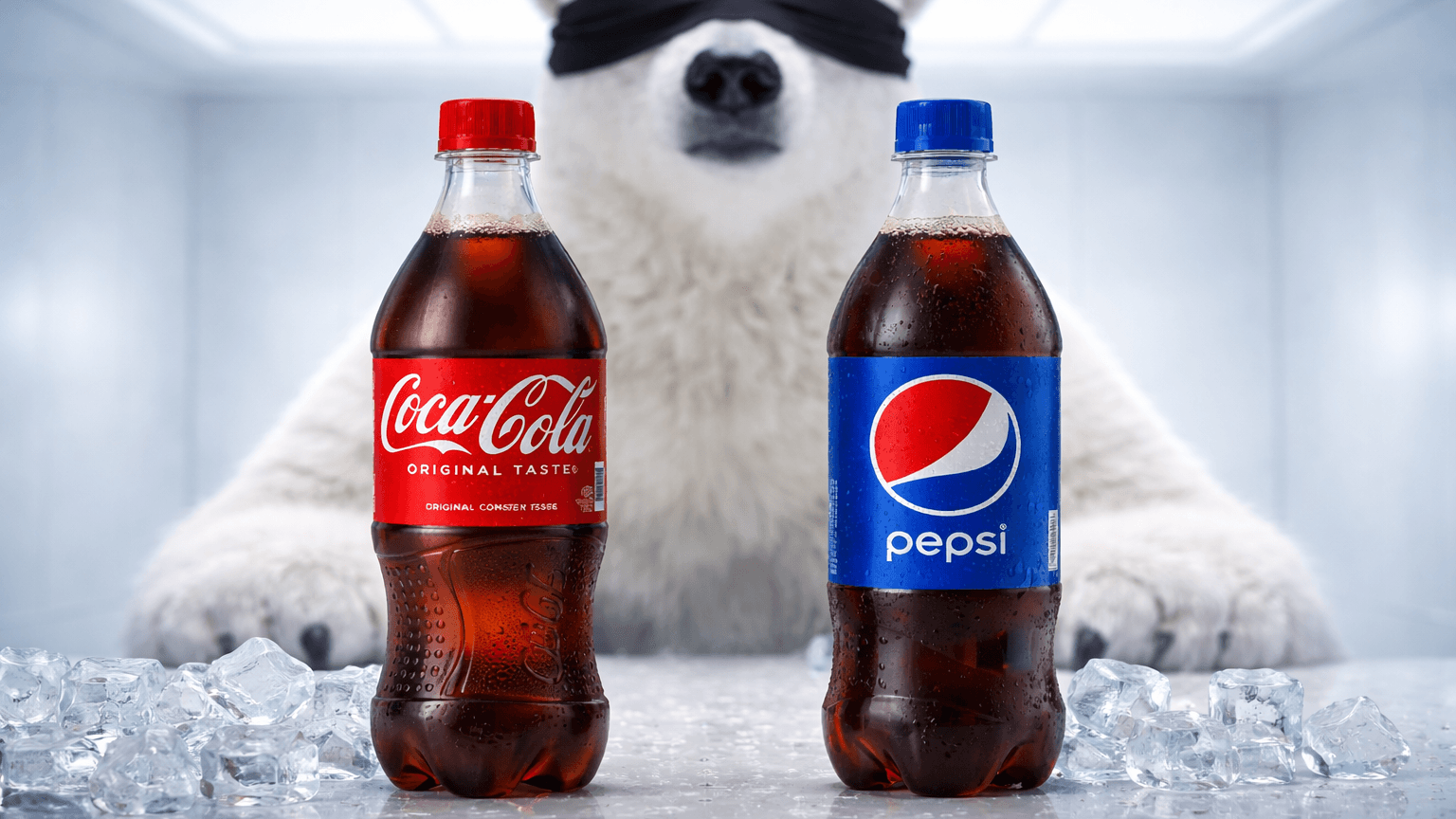
The competition between them has long divided consumer opinion. In an attempt to settle the debate, Pepsi launched its now famous blind taste tests in the 1970s and 1980s. The results were unexpected. Many participants preferred the taste of Pepsi over Coca-Cola.
Yet despite this apparent preference, Coca-Cola continued to lead in sales. At the time, researchers struggled to explain the contradiction. If people preferred Pepsi in blind tests, why did Coca-Cola remain the market leader?
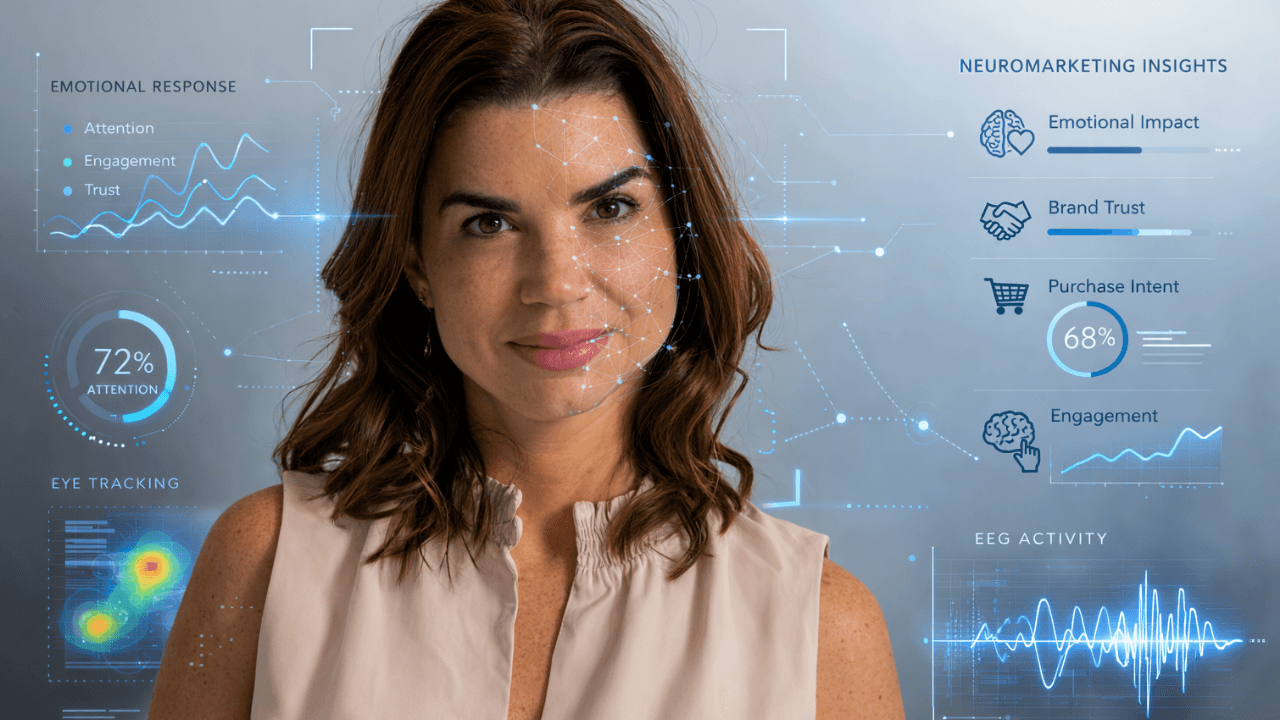
This case study explores what happens beyond taste. By looking at how the brain processes emotion, memory, and perception, we begin to understand how Coca-Cola built a stronger preference in consumers’ minds through emotional and psychological strategies.
Neuroscience of decision: The Montague Study (2004)
As previously mentioned, Pepsi promoted a blind test to seek a concrete answer regarding consumer preference. What was not possible to discover at that time was: why Coca-Cola continued to be the top seller if people preferred the taste of Pepsi.
The answer came in the well-known Montague Study, conducted in 2004. Montague replicated the Pepsi test inside fMRI (Functional Magnetic Resonance Imaging) machines to observe the participants' brains in real time. The experiment was divided into two phases:
Phase 1 - The blind test: Participants tasted Coca-Cola and Pepsi without knowing which brand they were drinking. What happened in the brain was a strong activation in the Ventromedial Pre-Frontal Cortex (vmPFC), an area strongly linked to the reward system and the perception of immediate sensory pleasure.
When participants drank Pepsi, this area "lit up" more intensely due to the sweeter taste. At this moment, the decision was purely physiological, as if the brain said "This has more sugar and energy, I prefer this".
Phase 2 - The brand test: Participants were informed which brand they were about to drink. What happened in the brain was hyperactivity of the Hippocampus and the Dorsolateral Pre-Frontal Cortex (dlPFC).
When informed they would drink Coca-Cola, the game changed. Almost 75% of participants stated they preferred Coca-Cola. The Hippocampus is the "storage centre" of memory and emotions, while the dlPFC is associated with higher cognitive functions, working memory, and behaviour control.
The sight of the red logo and the "Coca-Cola" brand activated affective memories, Christmas campaigns, polar bears, family moments, and happy jingles. Emotional memory "hijacked" sensory perception. The brain altered the perceived taste based on the expectation created by the brand.
Brain mechanisms and cognitive biases involved
To understand how Coca-Cola built this emotional bond in consumers' brains, we will analyse the heuristics and biases involved and where does each one impacts the marketing strategy:
Affect heuristic: Coca-Cola's narrative is not based on technical attributes, but on emotional attributes. Happiness, family, friends, special dates... All of this is processed by the brain as a positive feeling associated with the brand, functioning as a shortcut in the purchase decision.
Mere exposure effect: the more you see something, the more familiar and reliable to your brain it becomes. Coca-Cola's multi-channel strategy allows communication to reach people more frequently. The more it is seen and associated positively, the more familiar and reliable the brand becomes, increasing preference in the consumer's brain.
Somatic markers: according to António Damásio, every experience lived by a human being leaves small markers loaded with emotion (whether positive or negative) and physiological responses (butterflies in the stomach, spontaneous smile, sweating). The narrative based on good moments combined with product consumption in good moments creates positive somatic markers that influence the consumer's preference and purchase decision.
How to apply in marketing strategies
As we could see, technical attributes (such as taste) are not the only factor that determines success or preference for a product or brand. Recent studies show that, even in the B2B market, emotional factors and relationships with brands influence purchase preferences and decisions.
When thinking about a marketing strategy capable of creating an emotional bond and consumer preference, consider the following points:
• Customer experience goes beyond the product: having a good product (like the taste of Pepsi) is fundamental, but does not guarantee market leadership. To create preference, brands must consider narrative, interactions with the consumer, and emotional factors.
• Consistency is key to the hippocampus: Coca-Cola has maintained the same central message ("happiness", "sharing", "refreshment") for decades. This consistent repetition builds strong neural pathways, as we saw previously with the Zeigarnik effect. Changing positioning all the time fragments brand memory and can cause mental confusion.
• Neuroscience-based storytelling: tell stories that activate empathy (mirror neurons) and episodic memory. Campaigns that focus on "see how people feel good when consuming our product" and not on "our product is better" manage to break the barrier of generic and superficial communication.
Showing people consuming, in positive contexts and having a good experience, helps the consumer imagine themselves in the consumption situation.
Final considerations
The Pepsi vs. Coca-Cola case shows that the purchase decision goes far beyond rational choice. In the blind test, Pepsi won by activating the reward system (vmPFC) of the brain with the sweeter taste. However, upon revealing the brands, Coca-Cola activated the hippocampus and the participants' affective memories. This shows us that emotional memory has the power to alter our sensory perception.
This leadership of Coca-Cola is the result of the continuous construction of somatic markers and positive emotions. By associating its image with happiness repeatedly, the company activated the affect heuristic. This consistency of decades created neural pathways so strong that the brand became a cognitive shortcut. The brain, seeking familiarity, simply chooses the emotion before evaluating the drink.
The great practical lesson is that having a technically superior product does not guarantee success in isolation. It is necessary to invest in storytelling that activates the empathy and mirror neurons of the audience. Campaigns focused on emotions and real contexts generate more connection than listing technical attributes. By prioritising the emotional experience, the company gains loyalty at the deepest level of the mind.
If you want to know more about how consumers make decisions, check our previous case study about McDonald’s here.
Join our Newsletter
Author